Water Screen Projection System
A water screen projection system is three systems agreeing with each other: the water that forms the screen, the projection that paints it, and the control that plays both inside the show. This page takes them in that order.
- Screen formation
- Projector geometry
- Show-integrated playback
Water Screen Projection Systems: Three Parts, One Image
The screen itself is water — a fan-shaped sheet thrown from screen-forming nozzles, thin enough to take an image and substantial enough to hold one in moving air. Its size is set by the audience: too small and the film is a postage stamp across a lake; too large for the water supply and the sheet thins, tears in wind and loses the picture. Screen formation is fountain engineering, which is why the format belongs inside a fountain project rather than an AV package.
Projection is geometry. Projectors need positions with the correct throw distance and angle to the screen, protected from weather and spray, and the image needs darkness — ambient light from the venue is the silent budget item in every water screen brief. Playback closes the triangle: content is cued from the show control so a film segment lands inside the musical program, preceded and followed by water choreography, instead of running as a separate attraction bolted onto the fountain.
- Screen formation
- Dedicated nozzles and water supply forming a stable fan sheet, sized to audience distance
- Projection positions
- Throw distance, angle, weather protection and ambient-light control settled in design
- Playback & control
- Content cued on the show timeline with the fountain's jets, lights and music
- Content
- Film, video and laser graphics prepared for the screen's proportions
Where Projection Systems Earn Their Cost
A water screen segment is the most production-heavy part of a multimedia show, and it earns its place where content matters: a festival that must tell a story, a national celebration with a film at its centre, a resort show that changes its program with the season. Where the brief is purely choreographic, a musical fountain with laser segments usually serves better — and part of honest design work is saying so in the review.
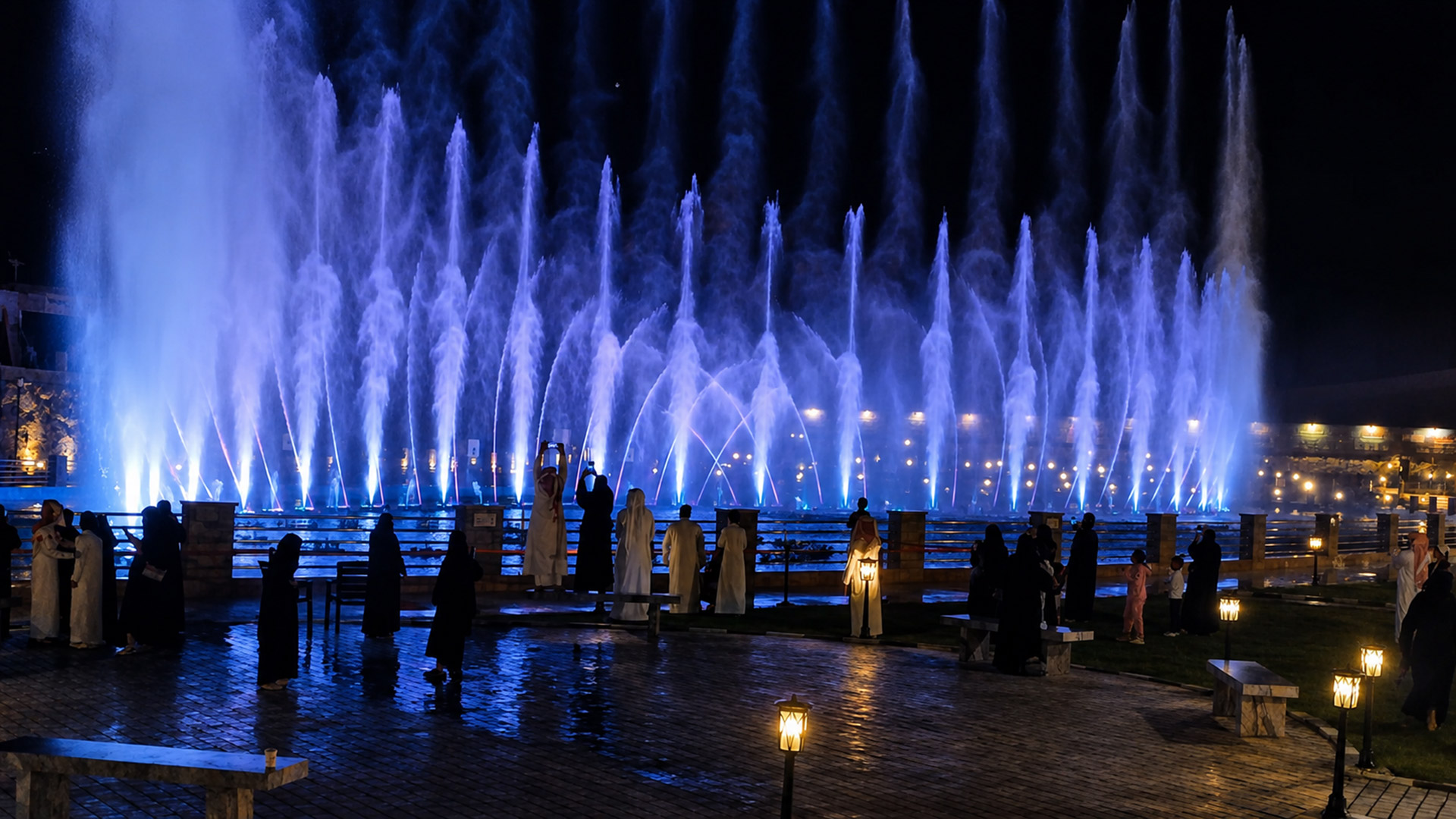
The Valley Resort reference shows the balanced pattern: dancing fountain choreography as the body of the show, water screen and laser effects as its multimedia layer. If your venue plan already exists, send it — screen position and projector geometry can be assessed against real sightlines before any equipment is discussed.
Content Is a Production Discipline
The last component is the one most often under-scoped: the content itself. A water screen shows what it is given, at the proportions it is given in. Film shot for a rectangular cinema screen, thrown unprepared onto a fan of water, crops its own story at the edges and greys at the margins. Content for a water screen is produced or adapted for the screen — bold imagery, centred action, contrast that survives translucency — and that production belongs in the project scope beside the hardware, with its own schedule and approvals.
Venues with changing programs should settle the content pipeline at design stage: who produces, who approves, in what format and resolution the playback library is kept. A water screen's famous flexibility is entirely a property of this pipeline. The nozzles merely make the surface; the pipeline makes it a cinema.
Projection System Questions
What content formats can be shown?
Film and video prepared for the screen's aspect, plus laser graphics. Content production is scoped per project; the system side described here — screen formation and throw geometry, with playback coordinated into the show control — is the Aqualume design scope.
How large can the screen be?
Screen size follows audience distance, water supply and site conditions, set during design. There is no honest catalogue number — any supplier quoting one without your venue plan is guessing.
Does the screen work on a lake?
Yes — open water is a classic water screen setting, with the screen formed from a platform or shore position and projectors on shore. Geometry is assessed per venue.