How to Plan a Musical Fountain Project
A musical fountain project succeeds in its planning or not at all. This guide sets out the working order: the facts to gather, the decisions to take in sequence, and the questions that belong in the quotation rather than after it.
- Step checklist
- Design process
- Quotation questions
Step One: Fix the Site Facts
Before formats and effects, gather what the site dictates: dimensions and geometry of the basin, lake or paving area; water depth and level behaviour; the audience — where they stand, how many, how close; existing underground services, power and drainage; and the site's other jobs, from market days to heritage constraints. Most of this is measurement, not opinion, and all of it outranks preference: the site will veto designs that ignore it, expensively and late.
Photograph the site at the hour the show will run. Ambient light, backdrop and crowd flow at dusk decide more real design questions — feature height, lighting strength, screen feasibility — than any midday site visit.
Step Two: Decide the Format Before the Effects
Basin, dry deck, floating, water screen — the format decision frames every later choice, and it is a decision about the space's life, not about equipment. The comparison guide on this site works the dry-versus-wet question in full; lakes argue for floating; venues with a story to tell argue for a water screen layer. Take this decision with the site's operators in the room, because they will live with its off-state for decades.
Name the audience
Watchers in the round, promenade passers-by, playing families, terrace guests — the answer sets geometry and scale.
Name the off-state
What the space is when the water stops: square, forecourt, empty lake. If the off-state embarrasses, the format is wrong.
Name the program
Evening landmark show, daytime play, event multimedia — the program picks the effect families worth buying.
Name the operator
Who runs and maintains it weekly. Ambition must fit the real maintenance team's week.
Step Three: Work Through the Design Stage
With site facts and format fixed, the design stage converts them into a judgeable show: project review, 3D simulation from the real viewpoints, equipment layout zone by zone, and hydraulic and electrical design. Judge the simulation hard — this is the last moment changes are free. Check the quiet passages as carefully as the peaks; check the view from the worst seat, not the rendering's favourite; check the off-state drawings too.
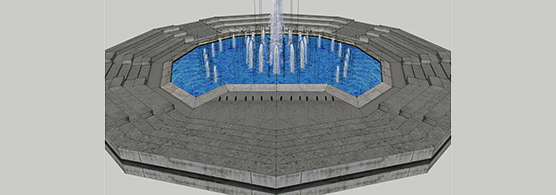
Then freeze the design into the quotation. A professional quotation prices a defined system: equipment schedule, control and programming scope, installation pattern, commissioning and the commercial basis — payment terms (T/T) and Incoterms (EXW, FOB, CFR, CIF) confirmed in the quotation, with lead time and minimum order quantity confirmed for your project in the same document. Vague quotations are not bargains; they are deferred arguments.
Planning Questions Buyers Forget to Ask
When should the fountain team see the site?
At the fact-gathering step — before the format is fixed. A design review on real site facts prevents the two classic failures: the beautiful wrong format and the right format at the wrong scale.
How detailed must our brief be?
A page is enough if it carries the site facts and the four namings — audience, off-state, program, operator. The design stage exists to develop detail; your brief's job is to be honest, not exhaustive.
What is the most common planning mistake?
Buying effects before deciding format and audience. Effects are the cheapest thing to change and the most expensive thing to waste; they belong last in the planning order, however the brochures arrange them.