Fountain Control System
Every effect on this site is a rumour until the control system performs it. The control layer — PLC logic, DMX show data, project-built cabinets and the program itself — is what turns equipment into a performance.
- PLC & DMX architecture
- Project-built cabinets
- Show programming
- In-house integration
Fountain Control Systems: Architecture of a Performance
A musical fountain runs two kinds of control at once. The PLC layer is the plant room's discipline: pumps, valves, water levels, filtration and safety interlocks, run with industrial reliability whether or not a show is playing. The DMX layer is the stage: a continuous timeline of cues that drives motion nozzles, lighting and effects in synchronisation with the music. Aqualume designs both layers, builds the control cabinets in-house, and writes the show program against the installed hardware — the three scopes that most need one hand are in one hand.
| Layer | What it runs | Notes |
|---|---|---|
| PLC control | Pumps, valves, levels, filtration, safety interlocks | Plant discipline; runs with or without a show |
| DMX show control | Motion jets, lighting, effects on a musical timeline | Per-unit or zone addressing across the field |
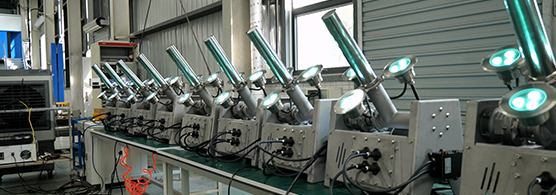
| Control cabinets | Power distribution and control hardware for the project | Manufactured and assembled in-house |
| Show programming | Choreography written and commissioned on the installed system | New programs added without hardware change |
One discipline runs through the table: control vocabulary is product-specific, and each product family's stated basis is given on its own pages, in its own terms. Everywhere else, the architecture above is the pattern the company's systems work to — PLC for the plant, DMX for the performance, cabinets built for the project.
Programming Is Where Shows Are Won
Hardware decides what a fountain can do; programming decides what it does, nightly, for years. A well-programmed show respects its own material: it gives the field time to build, rests the water between peaks, writes quiet passages that make the loud ones land, and treats lighting as a voice rather than a floodlight. A poorly programmed show runs everything at once and exhausts its audience and its equipment together.
Because the program is software on the control system, it is also the fountain's future: seasonal programs, event nights, new music and revised choreography are programming work, commissioned without touching the installed base. When a project is scoped, the programming conversation — how many programs, what occasions, who operates the system day to day — deserves the same seriousness as the equipment list. The programming and commissioning service page describes how that work is delivered on site.
Operator Interface: Schedules, Manual Control and Overrides
Between the architecture and the audience sits the operator. A working control system presents the venue's team with a small set of honest controls: today's schedule, the program library, manual run and stop, and overrides for the days the timetable breaks — the state visit, the storm warning, the wedding that booked the plaza. These are not luxuries; a system whose operators cannot confidently run it will be run rarely, timidly, or not at all.
The handover scope therefore includes the operator interface as a deliverable in its own right, tested with the venue's own staff during commissioning. When you scope a control system, ask to see how a tired operator at the end of a long event day starts the evening show. The answer predicts your next decade of evenings.
Control System Questions
Can the system run unattended on a schedule?
Show scheduling is a normal part of the control scope — daily programs, quiet daytime patterns and evening shows run to the venue's timetable, with manual control available to operators.
What happens if one unit fails mid-show?
The PLC layer's interlocks protect the plant, and zone-based programming means the show can continue around an isolated unit until it is serviced. Faulty units are identifiable rather than silent.
Can we commission new shows years later?
Yes — programming is the renewable part of the fountain. New programs are written against the installed zones and effects, which is why the original effect-zone design matters long after opening night.