Fountain Control System
PLC, DMX and cabinets — the layer that runs lights, jets and effects as one program.
Explore →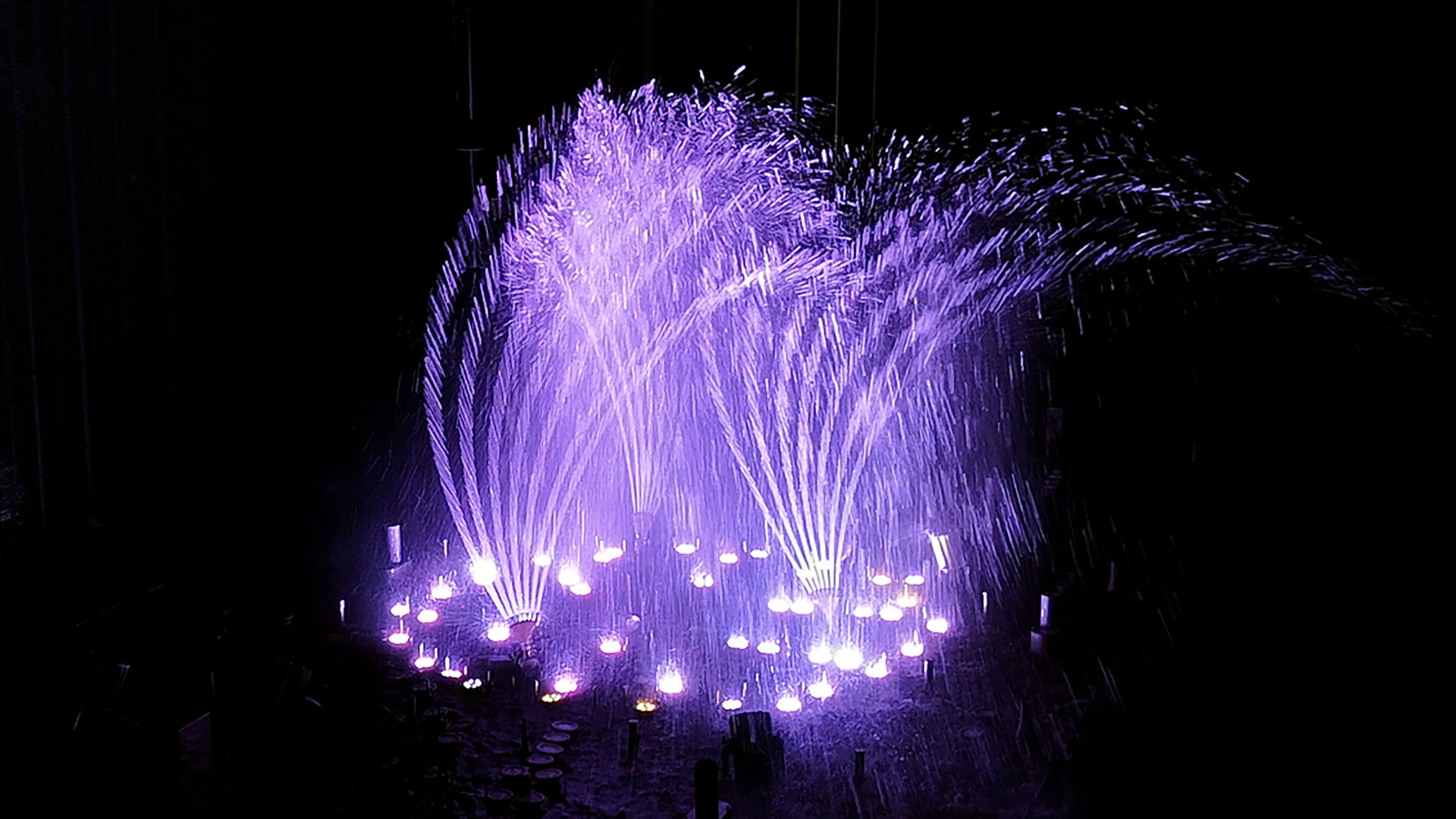
At night, lighting is half the show. Underwater fountain lights colour the water from inside, chase with the jets and turn the same choreography into a completely different evening performance.
A fountain light does two jobs: it makes the water visible after dark, and it gives the choreography a second voice. Colour washes set the mood under a quiet passage; chased fixtures race along a ring as the jets build; a feature moment lands when water and light peak together. Aqualume manufactures its underwater lighting systems in the same scope as its fountains, so fixtures, cabling and control are specified against the actual basin and the actual show program.
The integration point is DMX control. The motion nozzle pages show the pattern plainly — integrated units carrying their own RGB lighting, specified on those pages — and the same approach scales to the lighting field: fixtures addressed individually or in zones, programmed on the show timeline alongside jets, pumps and effects. Lighting is never an afterthought circuit switched on at dusk; it is rehearsed with the water.
Water is not a screen; it scatters light according to its texture. A laminar arc glows like a glass rod when lit from its base. An aerated foam jet drinks light and turns it into volume. A fan sheet becomes a curtain of colour. Fixture placement therefore follows the nozzle plan: lights sit where the water they serve is thrown, and colours are chosen against the water texture, not just the music.
Dry deck fields make the point clearest — the fixtures are in the paving, inside the play space, and their programming separates the gentle daytime pattern from the full evening show. Whatever the setting, the lighting design is proven in the same 3D simulation stage as the water effects, so the night show is approved before a single fixture is manufactured.
Usually, where basin access and electrical capacity allow. Send basin dimensions and photos; the assessment covers fixture positions against your existing nozzle layout first.
With the show. DMX programming puts lighting cues on the same timeline as the water effects, and simpler static or zoned programs are available for non-show hours.
Fixtures are specified flush for pedestrian surfaces and programmed with child-friendly daytime patterns as well as the evening show — see the dry deck pages for the format.